Industry Insights
LED Sign Retrofits vs. Full Replacement: The Real ROI
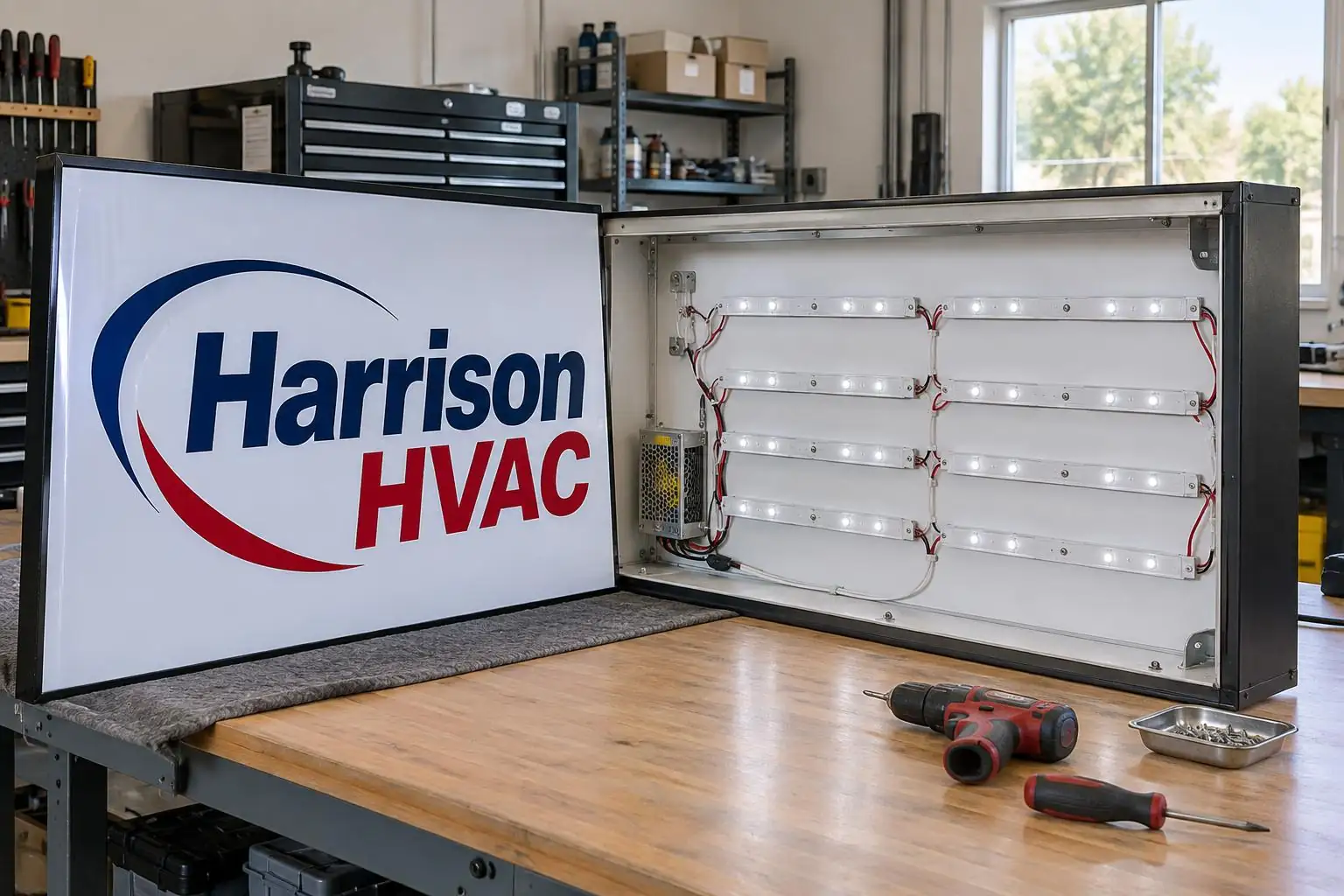
If your sign was built before 2015, there's a good chance it's still running fluorescent tubes or, on older signs, neon. Both work — until they don't. And every year they cost more to keep alive than the LED alternative would.
The question we hear weekly: is it smarter to retrofit the sign we have, or replace the whole thing? Here's the framework we use to answer it.
What a retrofit actually involves
We remove the faces, strip out the fluorescent ballasts, sockets, and tubes (or neon transformers and tubing), and install matched LED modules with new low-voltage power supplies. Faces get cleaned, gaskets get replaced, and the cabinet is resealed.
For channel letters, we typically replace the trim cap and any degraded acrylic at the same time — the extra material cost is small compared to the labor of taking it down again in two years.
When retrofitting is the right call
- The cabinet, faces, and structure are in good shape (no rust, no delamination, no water damage)
- The layout still fits your brand — no rebrand or name change coming in the next 5 years
- The sign is fully code-compliant at its current size (a retrofit doesn't trigger new permitting in most jurisdictions)
- Budget is a real constraint — retrofits run 30–50% of the cost of a new sign
When to replace in Southwest Washington
- Rust, water intrusion, or corrosion in the cabinet — retrofitting a rotting box wastes the LED investment
- Faces are cracked, faded, or crazed (UV degradation is not economically repairable)
- Your business rebranded, changed name, or you want a different form factor entirely
- The sign is undersized for the location, or you can now legally build a larger sign than the last permit allowed
- It's a fluorescent-lit box that's failed multiple times in the last two years
Real payback math in Southwest Washington
A typical illuminated cabinet sign running 12 hours a day on fluorescent tubes draws about 400–500 watts. The LED-retrofitted version of the same sign draws 80–150 watts. At Washington commercial power rates, that's a $200–$400 annual power savings.
Add reduced service calls (LEDs almost never fail in the first 5 years) and a retrofit typically pays for itself in 3–5 years on power savings alone. A full replacement — where the old sign was going to need work regardless — pays back in 5–8 years and gives you a 15+ year runway.
What we recommend as a starting point
Call for a free inspection. We assess the cabinet, faces, wiring, and mounting. Twenty minutes on a ladder tells us whether your sign is a candidate for retrofit or whether you'd be throwing good money after bad. We give you both quotes and let you decide.
Frequently asked questions
- How long does an LED retrofit take?
- Most cabinet signs are retrofit in-place in one day. Channel letter sets take one to two days depending on letter count and access.
- Will the retrofitted sign look different?
- Slightly brighter, more even, and whiter (LEDs are 6500K vs. fluorescent's 4100K). Most clients prefer the LED appearance immediately.
- Do LEDs really last that long?
- Quality UL-listed modules are rated 50,000+ hours. At 12 hours a day of use, that's over 11 years before rated failure. Real-world we see 10–15 year life on installations we've been maintaining since 2015.
Talk to ESCO Pacific
Have a sign project in mind?