Industry Insights
In-House Fabrication vs. Outsourced: Why It Affects Sign Lifespan
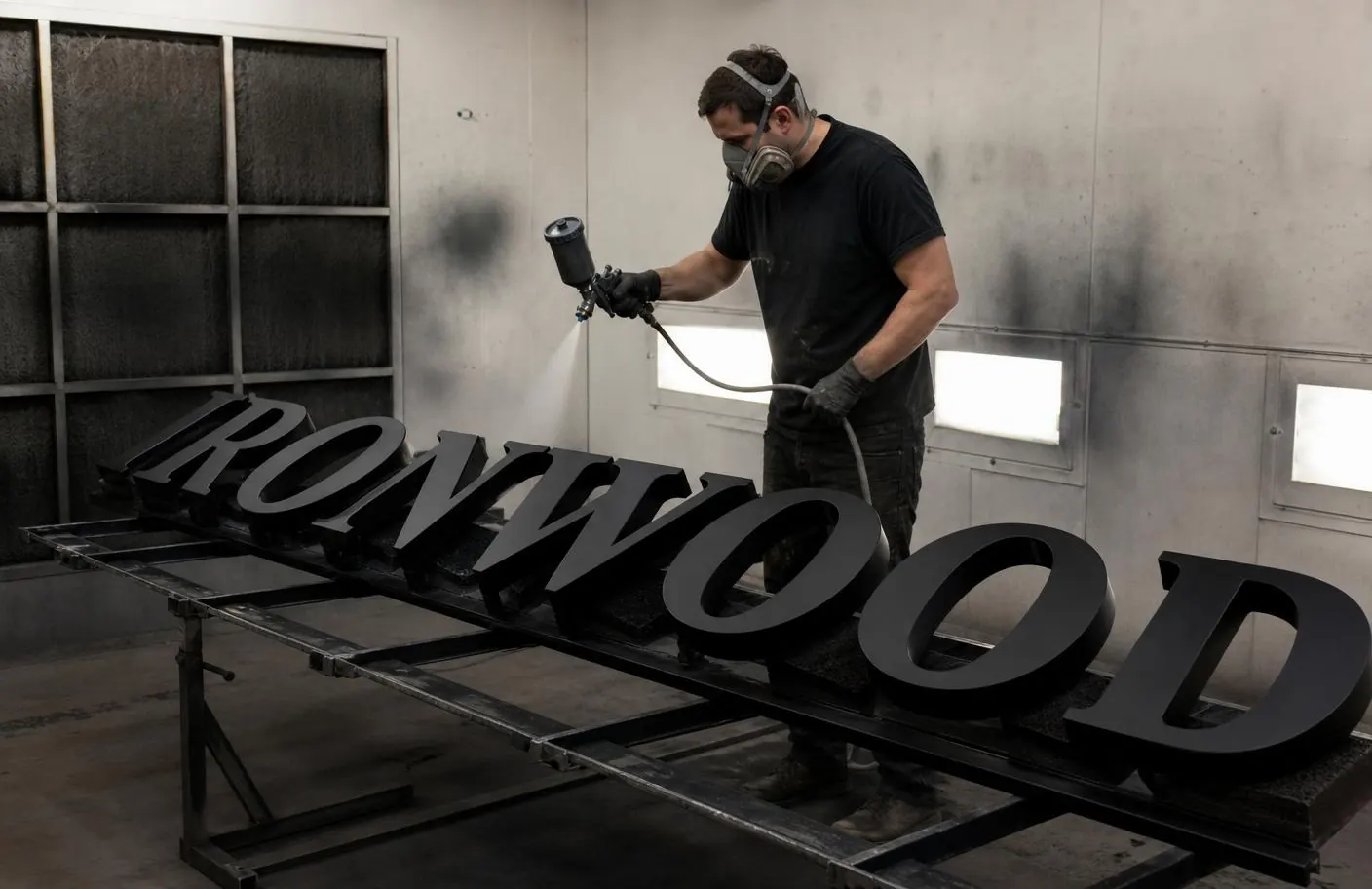
"We build our own signs" sounds like a standard marketing line until you look at what actually happens when a sign company outsources fabrication instead. A sign broker — a company that sells and designs signs but sends the actual build to a third-party shop — introduces a communication gap, a shipping leg, and a quality-control handoff that doesn't exist when design and fabrication happen under one roof.
Here's what that gap actually costs a project, and why it shows up years later as a lifespan difference, not just a process inconvenience.
How to tell if a company outsources fabrication
- Ask directly where the sign is physically built, and whether you can visit the shop
- A company that fabricates in-house can usually show photos or video of your specific project mid-build
- Unusually long lead times for simple sign types can be a signal of an outsourced production queue outside the company's control
Where the quality gap actually shows up
- Weld quality — a rushed or lower-standard weld on a wall-mounted sign is often the failure point a decade later, and it's invisible until it fails
- Paint and finish — catalyzed automotive-grade finishes hold color for 10+ years; lower-grade paint from a high-volume outsourced shop can chalk and fade in 2-3 seasons
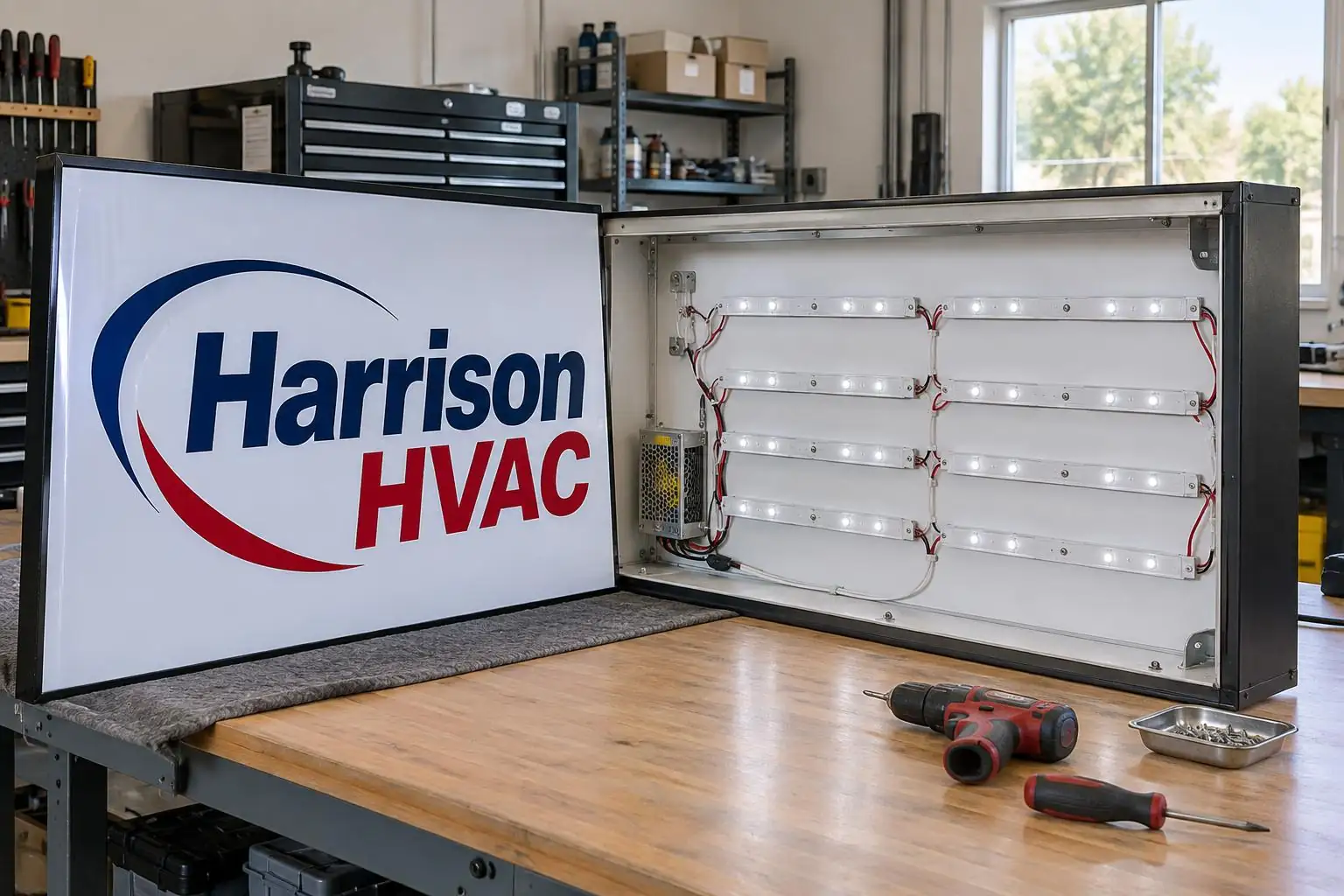
- LED and electrical assembly — bench-testing every illuminated sign before shipping catches defects before install; a broker relying on a third party has less visibility into whether that step actually happens
- Dimensional accuracy — a design change or field measurement correction is a same-day conversation in-house, versus a multi-step relay through a broker to an outside shop

Change orders and problem-solving speed
When design, engineering, and fabrication are under one roof, a designer can walk 30 feet and look at the actual piece in progress. A field measurement discrepancy, a color match question, or a last-minute client change gets resolved same-day. Routing that same question through a broker to a separate outsourced shop can turn a quick fix into a week-long delay.
Accountability when something goes wrong
If a sign fails prematurely — a weld cracks, a finish fades early, an LED module dies well before its rated life — an in-house fabricator owns every step of that build and can diagnose the actual cause. A broker relying on an outsourced shop is a step removed from the build process, which can slow down both diagnosis and resolution.
Does outsourcing ever make sense?
Specialty components — certain electronics, specific hardware, some cast or forged elements — are commonly sourced from trusted outside manufacturers even by shops that fabricate everything else in-house. That's different from outsourcing the core sign build itself. The distinction worth asking about is whether the sign's primary construction happens in-house, not whether every single component does.
Questions worth asking before you sign a contract
- "Where is my sign physically built?"
- "Can I see photos or visit during fabrication?"
- "Who do I call if something goes wrong after install — you, or a third party?"
- "What's your typical lead time, and why?"
Frequently asked questions
- Is an in-house fabricator always more expensive?
- Not necessarily — cutting out a broker's markup can offset the perception that in-house costs more. Pricing varies by company regardless of fabrication model, so it's worth comparing on quality and accountability, not assuming one model is automatically cheaper.
- How can I verify a company actually fabricates in-house?
- Ask to visit the shop, or ask for photos/video of your specific project during production. A company with nothing to show mid-build is worth a follow-up question.
- Does in-house fabrication mean faster lead times?
- Usually, since there's no shipping leg or third-party production queue involved, but lead time also depends on the shop's current workload. It's one factor among several, not an automatic guarantee.
Talk to ESCO Pacific
Have a sign project in mind?