Guides & Education
Vehicle Wraps: The Complete Guide to Fleet & Commercial Wraps
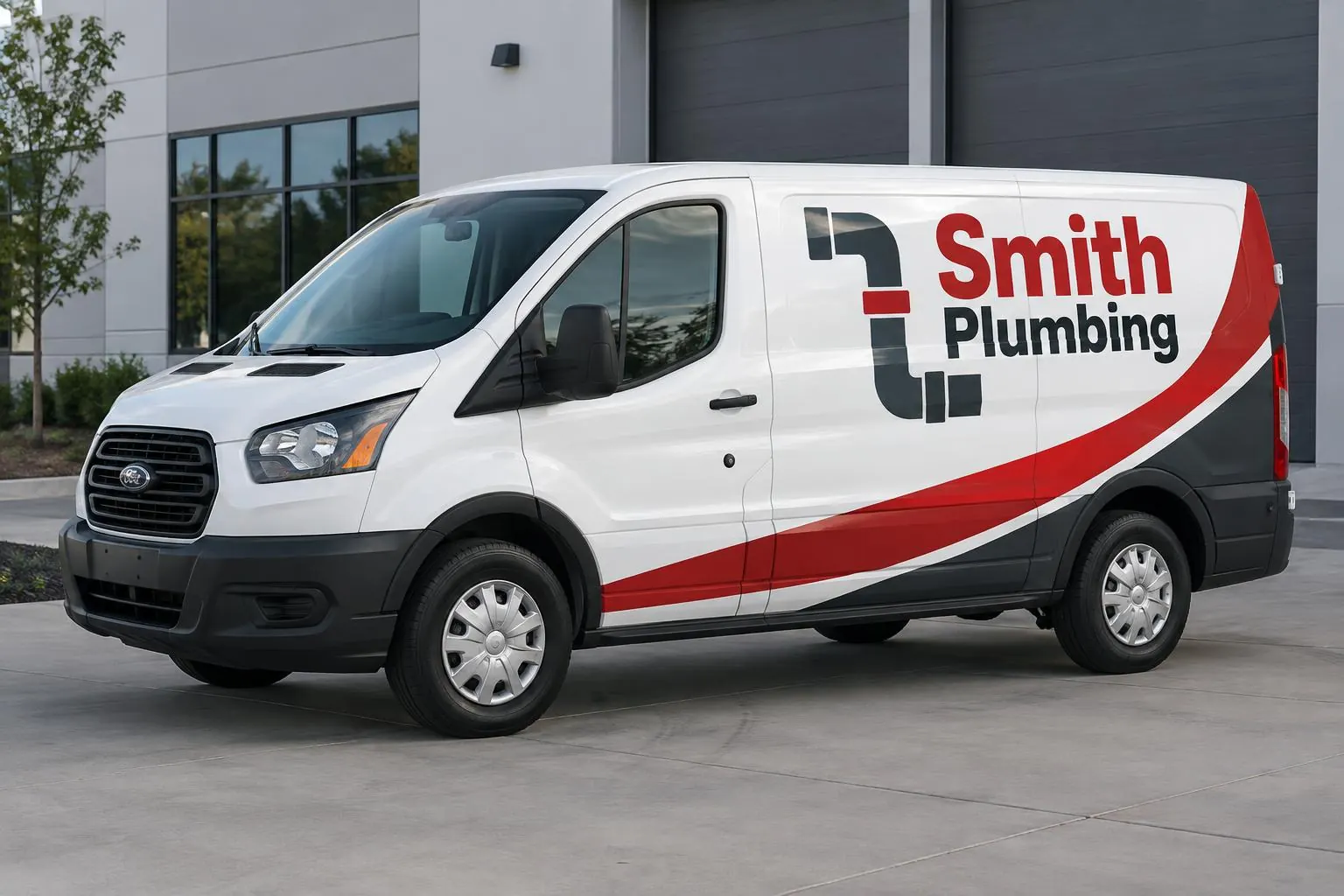
A vehicle wrap is the highest-ROI form of outdoor advertising available to a small business. A single wrapped work van driven through Chehalis, Centralia, and Olympia over the course of a week generates hundreds of thousands of impressions at a cost-per-impression that no billboard can match.
But wrap quality varies wildly. This guide covers the full playbook — vinyl choice, design, installation, warranty, and what to look for so your wrap still looks new in year seven.
Full wrap vs. partial wrap vs. graphics
- Full wrap: every exterior body panel is covered with printed vinyl. Maximum visual impact. Total design freedom.
- Partial wrap: rear quarter panels, hood, or rear cargo doors are wrapped; the rest of the vehicle shows through in factory paint. 40–60% of a full wrap cost.
- Cut vinyl graphics: logo, phone number, and web address applied to key sight surfaces. 15–30% of a full wrap cost.
The vinyls that matter
There are only two vinyl brands we specify on commercial jobs: 3M IJ180 series and Avery MPI 1105. Both are cast (not calendared), both are conformable enough to wrap curves without lifting, and both come with matched overlaminates that block UV.
Cheap calendared vinyl saves 20% on the print cost and fails in two years — cracking, shrinking, or lifting at every seam. Not worth the savings.
Design principles that convert
- One big idea. What's the business, what's the phone number. A wrapped van is a billboard at 30 mph — five words, one image.
- Contrast reads. Dark backgrounds with bright type outperform light backgrounds every time.
- Phone number on every side. Rear, both sides, and (subtly) hood. People photograph wrapped vehicles at stoplights — make the callback easy.
- Design for the vehicle's shape. Panel lines, door handles, wheel wells all interrupt graphics. Great design uses those breaks rather than fighting them.
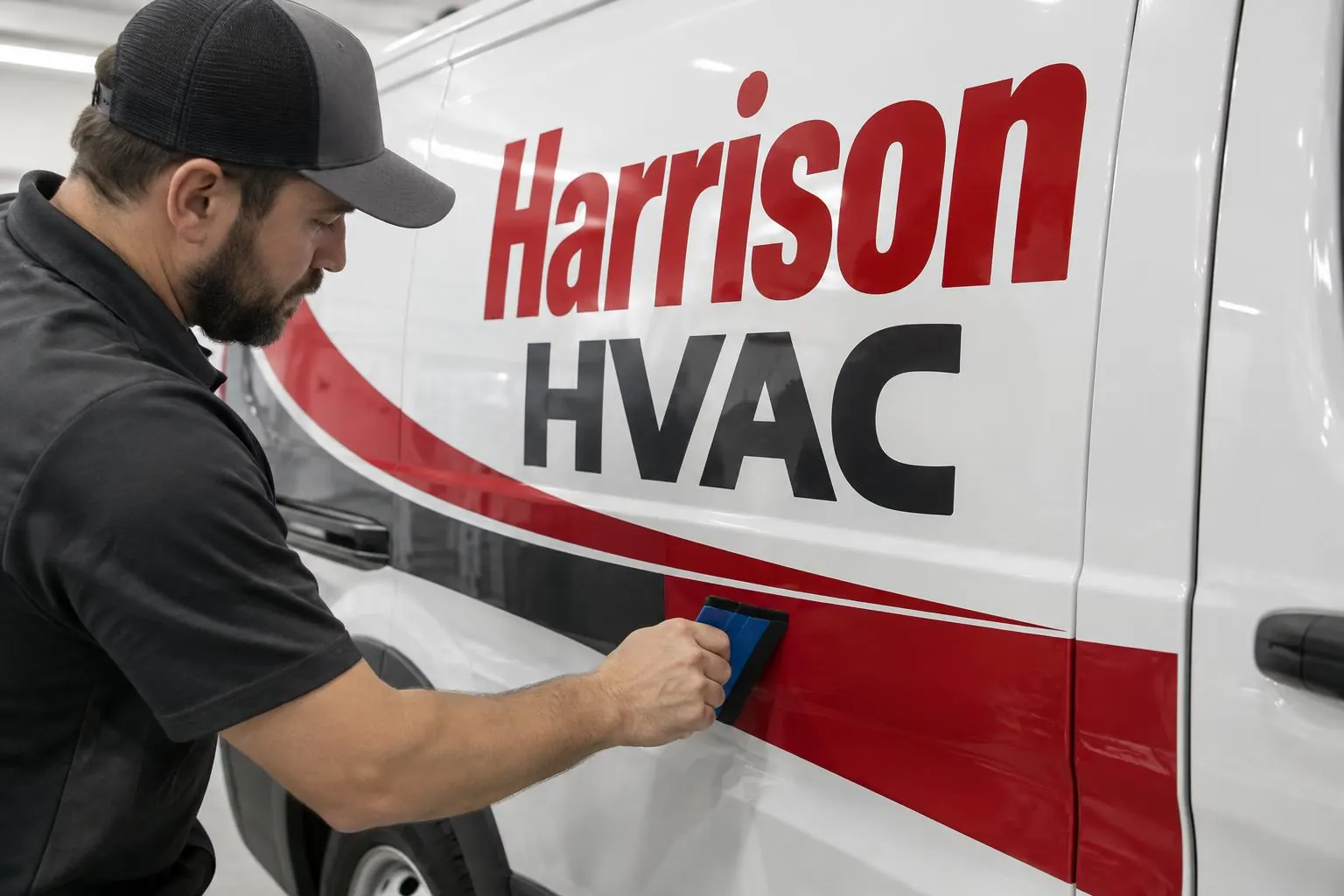
Installation: what you're really paying for
A great wrap install starts with a clean, decontaminated vehicle in a temperature-controlled bay. Every recessed seam gets a heat gun and a squeegee. Every edge gets post-heated to lock the memory of the vinyl.
A rushed wrap installed outdoors in the wrong temperature is guaranteed to lift within a year — usually on the rear quarter panels where the compound curves are hardest to work.
Cost by vehicle type
- Compact car / sedan full wrap: $2,800 – $4,500
- SUV / crossover full wrap: $3,500 – $5,500
- Cargo van (transit / sprinter class) full wrap: $4,500 – $7,000
- Box truck full wrap: $6,000 – $12,000
- Semi tractor / trailer wrap: $10,000 – $18,000
- Partial wraps / cut graphics: 20–60% of the full wrap price for the same vehicle
Lifespan and removal
A properly installed wrap using 3M or Avery cast vinyl with matched overlaminate will look great for 5–8 years and remain removable for 8+ years. Beyond that the adhesive gets aggressive and removal costs climb.
Removal from a leased or resale vehicle is a real line item. Budget $600–$1,500 to remove a full wrap depending on age and vehicle size. Cut graphics remove for a fraction of that.
Frequently asked questions
- How long does a vehicle wrap take to install?
- 1–2 days for a car or SUV, 2–3 days for a cargo van, 3–5 days for a box truck. Design and print add 1–2 weeks on the front end.
- Will a wrap damage my paint?
- No — as long as the paint is in good condition when wrapped. Wraps actually protect factory paint from UV and minor scratches for the life of the wrap.
- How many impressions does a vehicle wrap generate?
- 3M's studies put a locally-driven wrapped vehicle at 30,000–70,000 daily impressions. At those numbers, cost-per-thousand is under $0.50 over the life of the wrap — far cheaper than any other outdoor medium.
Talk to ESCO Pacific
Have a sign project in mind?