Permits & Compliance
How Long Does a Sign Permit Take in Lewis County vs. Thurston County?
Lewis County and Thurston County sit right next to each other, share plenty of business traffic between them, and still run completely separate sign permit review processes. If you're working on a project in Chehalis or Centralia and comparing notes with a colleague permitting a sign in Olympia or Tumwater, don't expect the same timeline — different departments, different caseloads, sometimes different review standards entirely.
Here's how to think about planning a sign project timeline when either county — or both — is involved.
Why timelines differ between neighboring counties
- Staffing and caseload — a smaller planning department with a lighter caseload can sometimes turn around review faster than a busier one, independent of code complexity
- Review process structure — some jurisdictions batch sign permits with general building permits; others have a dedicated, faster-moving sign-specific track
- Seasonal demand — permit volume tends to spike in spring and summer construction season in both counties, which can extend review time regardless of jurisdiction
General timeline expectations (confirm current specifics)
- Simple non-illuminated wall sign: commonly 2-4 weeks in either county under normal conditions
- Illuminated sign requiring electrical permit coordination: commonly 4-8 weeks combined
- Structural signs (monument, pylon) requiring engineering review: commonly 6-12 weeks
What tends to be true of city vs. county review
Within both counties, incorporated cities (Chehalis, Centralia, Olympia, Tumwater, Lacey) generally have their own dedicated planning staff and published sign codes, while unincorporated areas fall under the county's own development code. Neither structure is inherently faster — it depends on current staffing more than the jurisdiction type.
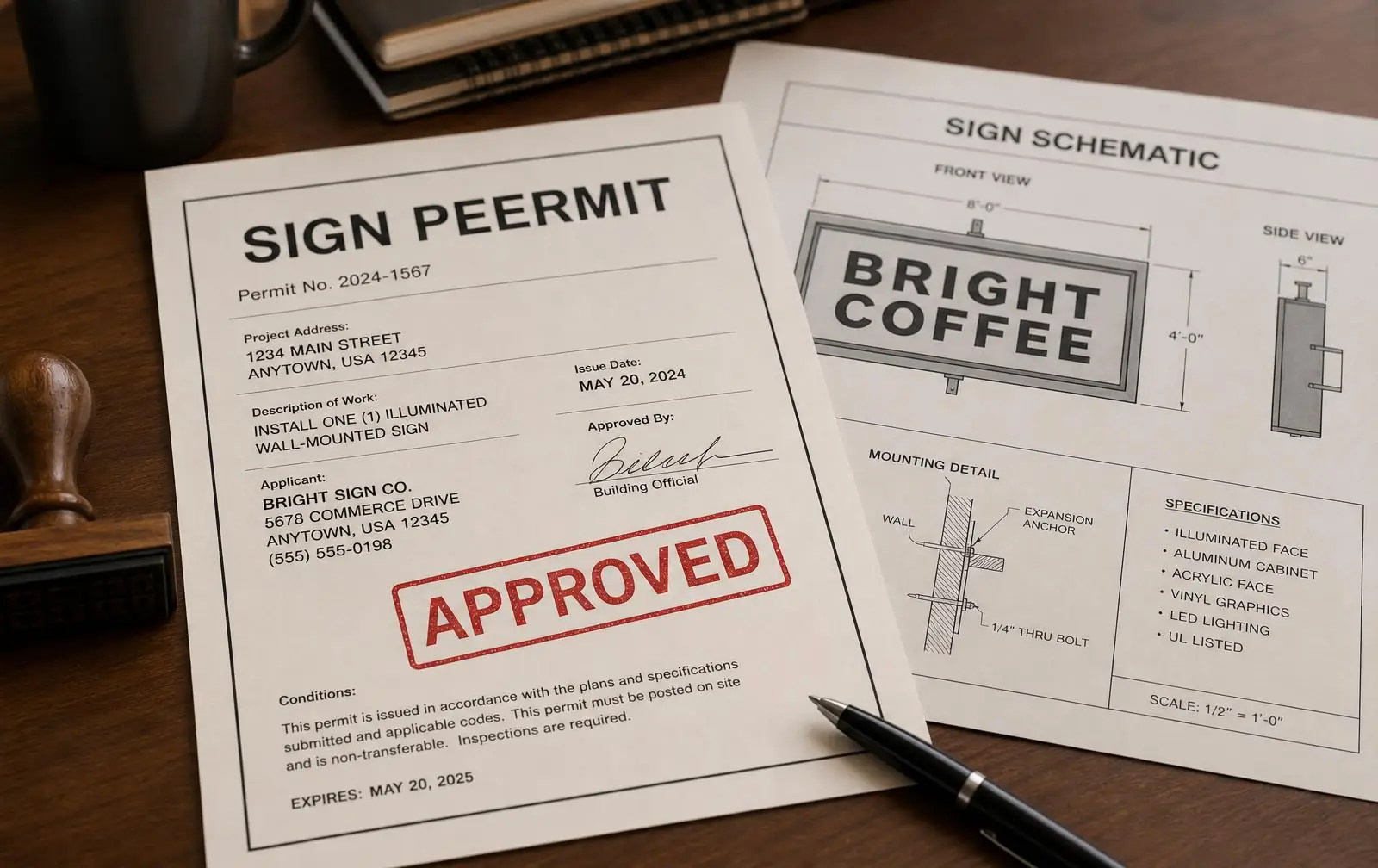
Multi-location projects spanning both counties
For businesses with locations in both counties, plan for each permit application to move independently — approval in one doesn't influence or speed up review in the other, even for a nearly identical sign design. Submitting both applications as early as possible, rather than sequentially, is usually the better approach when timelines are tight.
How to get a realistic timeline for your specific project
- Ask your sign company how recently they've filed in the specific jurisdiction — recent experience beats a generic published timeline
- Call the relevant planning department directly for current queue estimates if your timeline is tight and non-negotiable
- Build in a buffer regardless of which county — plan-check revisions can add weeks in either jurisdiction
Frequently asked questions
- Is one county generally faster than the other?
- There's no consistent answer — it shifts based on current staffing and caseload in each department rather than being a fixed characteristic of either county. Ask for a current estimate rather than relying on past experience from a different time of year.
- Can I submit permits to both counties at the same time for a multi-location project?
- Yes, and it's usually the better approach — submitting simultaneously rather than waiting on one before starting the other saves real time on a multi-location timeline.
- Does a fast approval in one jurisdiction mean the same design will be fast elsewhere?
- Not necessarily. Even an identical sign design goes through independent review in each jurisdiction, and one approving quickly doesn't guarantee the same speed elsewhere.
Talk to ESCO Pacific
Have a sign project in mind?