Guides & Education
Retail Storefront Sign Checklist: What to Decide Before You Call a
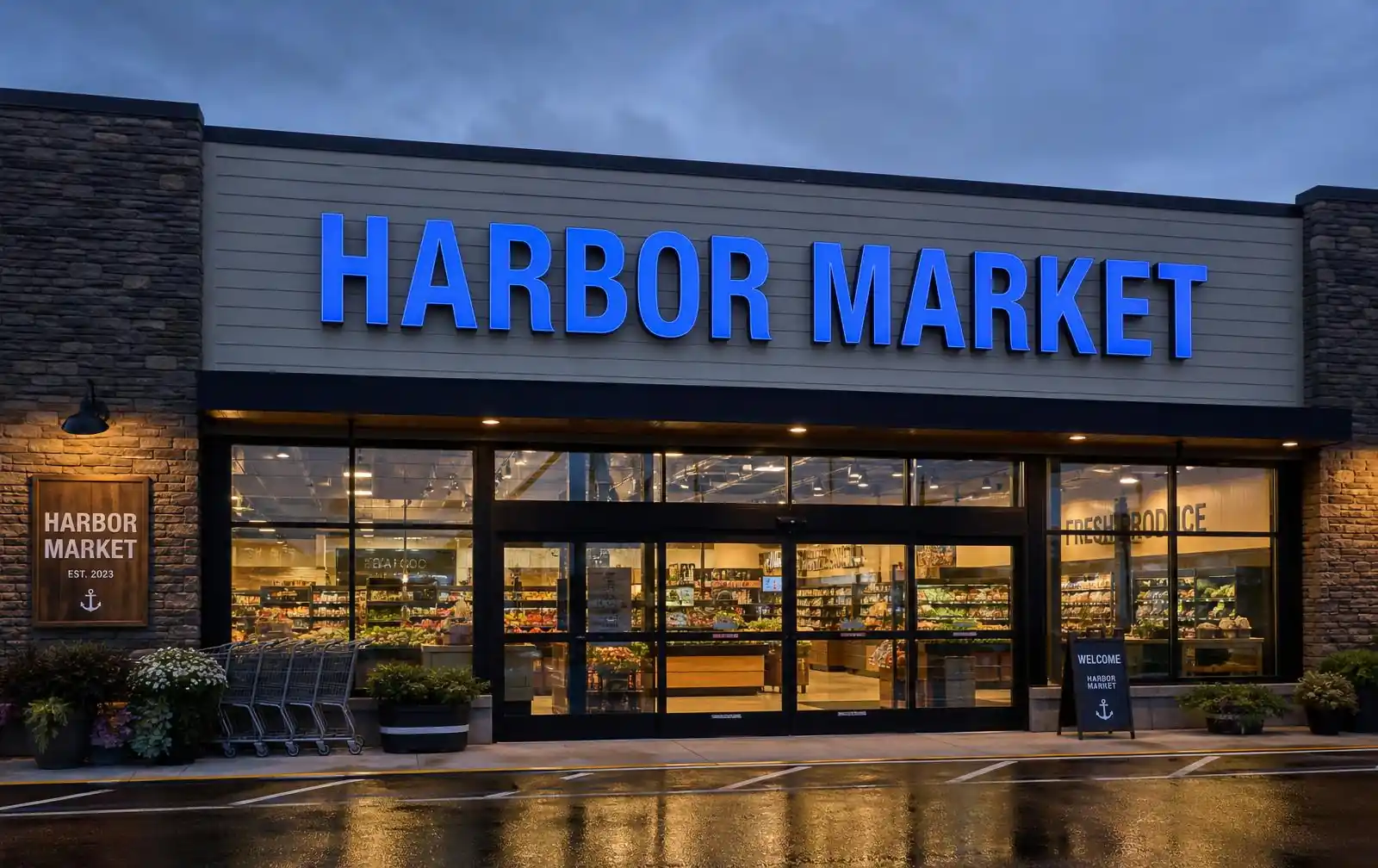
The storefront sign calls that move fastest from consultation to installed sign have one thing in common: the client walked in with answers already worked out, not just an idea. A handful of decisions — some obvious, some easy to overlook — determine how quickly a sign company can turn your idea into an accurate quote.
Work through this checklist before your first call, and you'll get a faster, more precise estimate instead of a wide range that has to narrow over several follow-up conversations.
1. Do you own the building or lease it?
If you lease, check your lease agreement for a sign criteria section before anything else. Multi-tenant landlords almost always specify size, placement, and sometimes even sign type — designing outside those bounds means a redesign later.
2. What's your realistic budget range?
- Window graphics package: $400 – $1,500
- Blade or hanging sign, non-illuminated: $1,500 – $4,000
- Flat-cut wall sign: $1,500 – $5,000
- Illuminated channel letter wall sign: $6,500 – $12,000
- Full layered package (wall + blade + window): $10,000 – $20,000
3. Do you have brand assets, or are you starting fresh?
Bring your logo files (vector, if you have them), brand colors (Pantone if known), and any brand guidelines. If you don't have a logo yet, say so up front — that changes the timeline and adds a design phase most sign companies can handle in-house.
4. What's your timeline, and is it fixed?
A grand opening date or lease deadline changes how a sign company sequences design, permitting, and fabrication. Flag a fixed date immediately — it may mean skipping certain sign types that carry longer permit timelines, like a monument sign with engineering.
5. Illuminated, or non-illuminated?
- Illuminated: better after-dark visibility, higher cost, needs an electrical permit
- Non-illuminated: lower cost and simpler permitting, limited to daylight-hours visibility
- If you're not sure, share your typical customer traffic hours — that usually settles the decision
6. Who's the decision-maker, and who needs to approve the design?
If a design has to clear a landlord, a franchise brand standards team, or a business partner before it's final, say so at the start. Building that approval step into the timeline up front avoids a design that gets rejected after everyone thought it was final.
Frequently asked questions
- What if I don't know what type of sign I want yet?
- That's normal — most clients start with a rough idea and a budget range, not a finished spec. A consultation is exactly where a sign company narrows a general idea down to a specific recommendation.
- How detailed does my budget number need to be?
- A range is enough. "Somewhere between $5,000 and $10,000" is more useful to a sign company than no number at all, and far more useful than an unrealistic number that doesn't match the sign type you're picturing.
- Should I get multiple quotes before deciding?
- Reasonable, but make sure you're comparing equivalent scope — sign type, illumination, permitting, and installation all need to match across quotes for the comparison to mean anything.
Talk to ESCO Pacific
Have a sign project in mind?