Guides & Education
Front-Lit vs. Halo-Lit Channel Letters: Which Looks Better at Night?
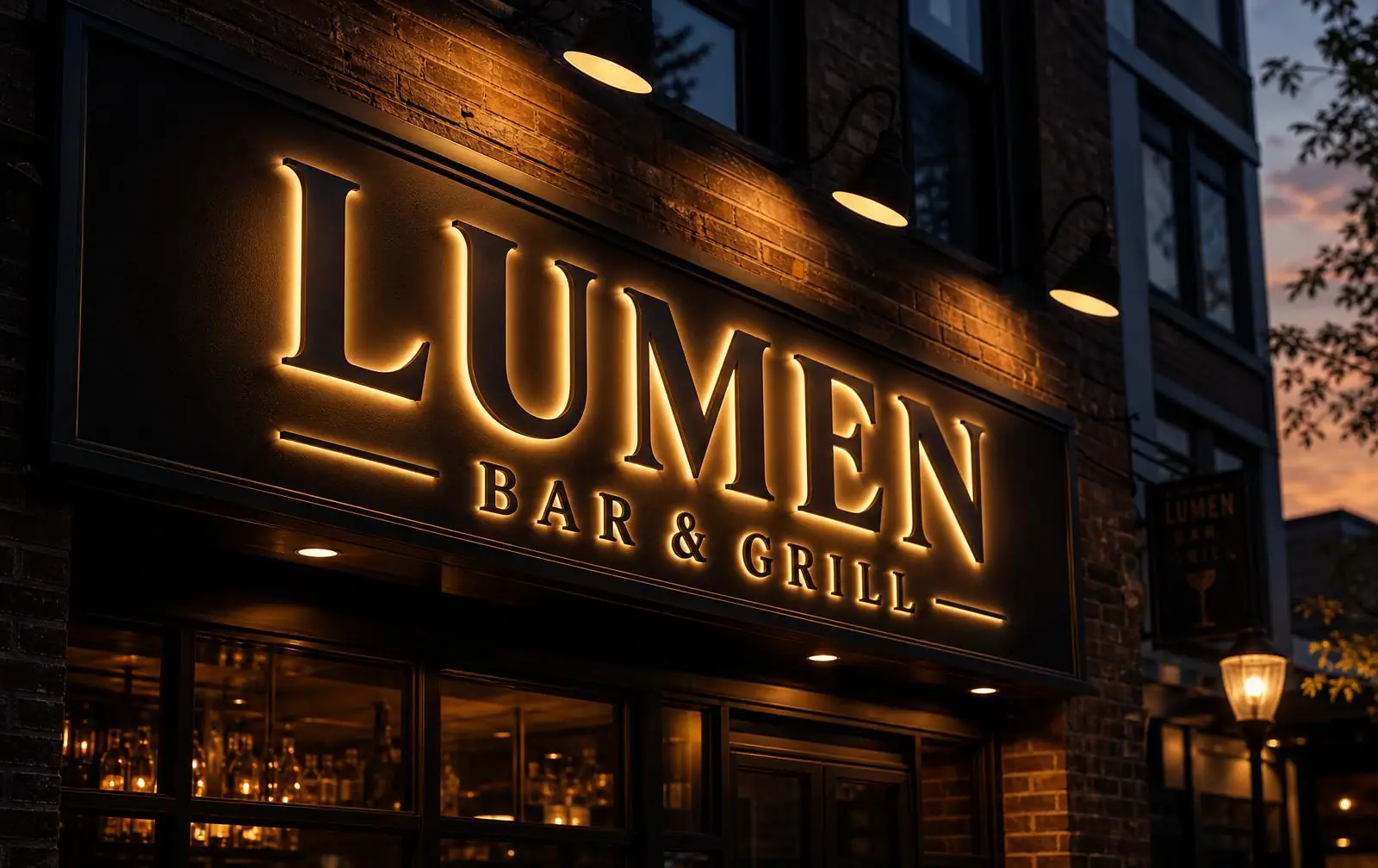
Front-lit and halo-lit channel letters use the same basic construction — a fabricated letter, an LED module, a power supply — but they solve completely different problems after dark. One is built to be seen from the road. The other is built to be admired up close.
If you're specifying a new channel letter set, the lighting style is one of the first decisions to lock in, because it changes the letter construction, not just the finished look. Here's how to choose correctly.
Front-lit: maximum visibility
In a front-lit letter, the LED modules sit behind a translucent acrylic face, and the whole face glows evenly. It's the highest-contrast, most legible option at night and from the widest range of distances and angles — which is exactly why it's the default for retail, quick-service restaurants, and any business relying on drive-by visibility.
Halo-lit: premium and architectural
In a halo-lit (back-lit) letter, the LEDs face the wall behind the letter instead of the viewer. Light bounces off the wall and creates a soft glow around the letter's outline, while the face itself stays dark or subtly lit. It reads as refined and architectural rather than loud — the look you see on finance offices, law firms, medical buildings, and upscale hospitality brands.
Side-by-side comparison
- Nighttime visibility: front-lit wins clearly — it's built for maximum legibility at distance and speed
- Brand perception: halo-lit reads as premium and understated; front-lit reads as bold and commercial
- Daytime appearance: both look similar unlit — the letter shape and finish do the work
- Wall requirement: halo-lit needs a wall with enough texture or standoff distance for the glow to read cleanly; a busy or heavily textured wall can mute the halo effect
- Cost: front-lit and halo-lit are close in base cost; combination lighting (both effects together) costs more
Combination lighting — the third option
Some projects use both effects on the same letter set — front face lit plus a halo glow behind. It's the highest-impact option and the most expensive, since it doubles the LED modules and wiring per letter. Worth considering for a flagship location where the extra cost is justified by visibility and brand impact; overkill for most standard storefronts.
Which one should you choose?
- Choose front-lit if: you need maximum visibility from the road, you're in a retail or QSR category, or your budget is the primary constraint
- Choose halo-lit if: your brand reads professional or upscale, your building has a clean wall surface behind the letters, and visibility from a distance matters less than the up-close impression
- Consider combination lighting if: this is a flagship or high-visibility location and the budget supports it
Frequently asked questions
- Which style costs more to run — front-lit or halo-lit?
- Power draw is similar for both since they use comparable LED module counts. Neither has a meaningful edge in energy cost; the decision should come down to visibility needs and brand fit, not electricity.
- Can I switch an existing front-lit sign to halo-lit?
- Sometimes, but it usually requires rebuilding the letter returns and face, since the LED placement and acrylic face are different for each style. It's closer to a replacement than a retrofit in most cases.
- Does halo-lit work on every building material?
- It works best on smooth, light-colored surfaces that reflect evenly. Dark or heavily textured walls can be lit successfully too, but the halo effect will be more subtle — worth seeing a sample or rendering before committing.
Talk to ESCO Pacific
Have a sign project in mind?