Guides & Education
Aluminum vs. Acrylic vs. PVC: Choosing Sign Materials for PNW Weather
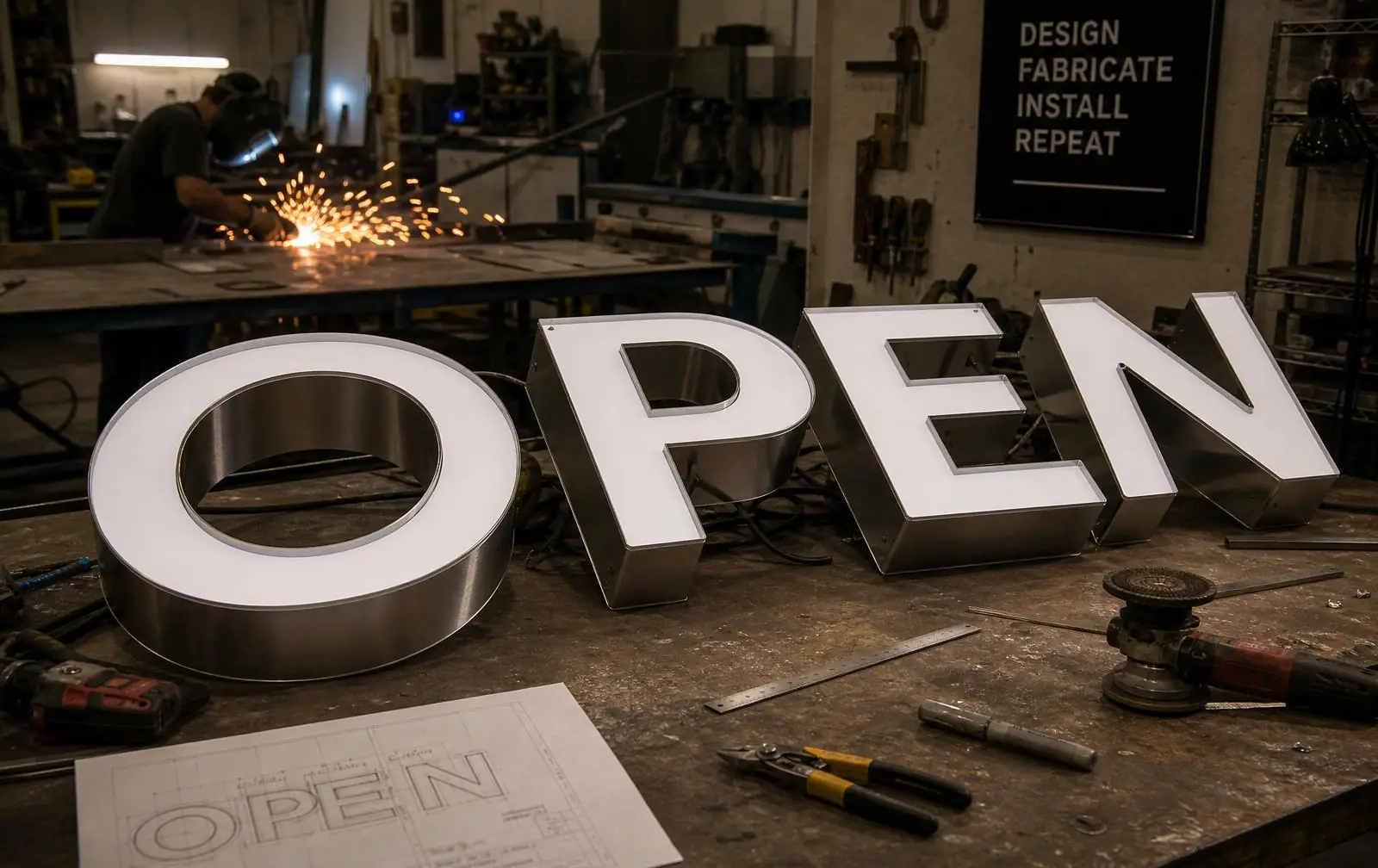
Pacific Northwest weather is a genuine material stress test — sustained rain, UV exposure even under overcast skies, temperature swings across seasons, and wind loading on anything freestanding. Material choice isn't a cosmetic decision here; it's the difference between a sign that looks sharp at year 15 and one that's chalking, warping, or cracking by year 5.
Aluminum, acrylic, and PVC each show up constantly in sign fabrication, and each has a different job. Here's how they actually compare.
Aluminum — the structural workhorse
Aluminum is the default for cabinets, panels, returns, and structural components. It doesn't rot, doesn't rust (unlike raw steel), and holds paint and powder coat finishes well for 10+ years under UV exposure. It's not typically used for translucent illuminated faces — that's acrylic's job — but for everything structural, it's the standard.
- Corrosion resistance: excellent, especially with proper finish
- UV/weathering: excellent — the metal itself doesn't degrade from sun exposure
- Best use: cabinets, panels, returns, dimensional letter bodies, structural framing
Acrylic — the face material
Acrylic is the standard for illuminated sign faces and routed dimensional letters because it's translucent, holds color well, and machines cleanly. Quality acrylic with UV-stable formulation resists yellowing for many years, though it's more susceptible to impact cracking than aluminum and needs periodic cleaning to avoid haze buildup from weathering.
- Corrosion resistance: not applicable — acrylic doesn't corrode
- UV/weathering: good with UV-stable formulation; can yellow or haze over many years without it
- Best use: illuminated channel letter faces, routed dimensional letters, cabinet sign faces

PVC — the budget-friendly interior and light-duty option
PVC (and similar substrates like Sintra) is common for interior signage, temporary exterior signage, and lightweight applications. It's inexpensive, easy to machine, and holds paint and vinyl well — but it's more prone to warping under sustained heat and UV exposure than aluminum or acrylic, which limits its best use to interior or short-to-medium-term exterior applications.
- Corrosion resistance: not applicable — but can warp under heat/UV over time
- UV/weathering: fair — fine for interior or short-term exterior use, not ideal for long-term permanent exterior signage
- Best use: interior signs, temporary signage, light-duty applications, budget-conscious projects
Side-by-side for long-term exterior use
- Longest lifespan outdoors: aluminum, especially for structural and painted components
- Best balance of function and appearance for illuminated faces: acrylic
- Least suited to permanent, high-exposure exterior use: PVC — better reserved for interior or shorter-term applications
What we recommend by sign type
- Exterior structural signs (monuments, pylons, cabinets): aluminum frame and panels
- Illuminated letters and faces: acrylic
- Interior signage: PVC, acrylic, or Lexan depending on budget and durability needs
- Short-term or event signage: PVC or corrugated plastic
Frequently asked questions
- Is stainless steel ever used instead of aluminum?
- Yes, on premium projects where the higher cost and heavier weight are justified — stainless resists corrosion even better than aluminum and has a distinct high-end appearance, common in medical and financial settings.
- Does PVC ever work for exterior signs at all?
- It can for shorter-term or lower-exposure applications, but it's not the first choice for a permanent, high-visibility exterior sign expected to last 10-15+ years. Aluminum and acrylic are better suited to that job.
- How do I know which material my quote is using?
- Ask directly — a detailed sign quote should specify material for each component (cabinet, face, letters). If it just says "sign material," ask for the breakdown before approving.
Talk to ESCO Pacific
Have a sign project in mind?